The shutter sounds at the convention rise and fall; people in front of the lens carefully adjust their wigs and makeup. In recent days, the ACG community has been flooded with one term. Some accuse this of treating characters as traffic tools, while others argue it’s an inevitable result of the times. The focus of the debate is not simply about good or bad, but about the redefinition of creative boundaries. The essence of our argument is actually the identity anxiety of traditional niche culture under the impact of digital media, and the pain of aesthetic standards shifting from fidelity to expressiveness.
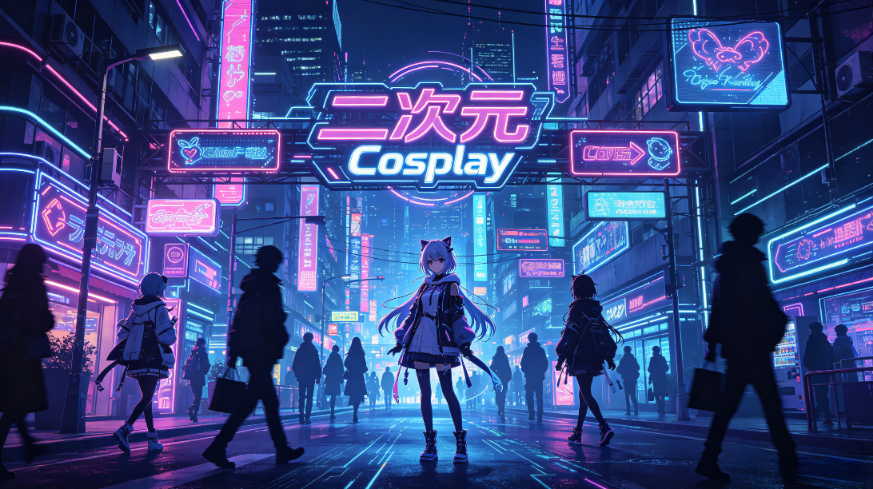
Who exactly are the ‘Jingcai Ren’? A clash of aesthetics and technology
From character restoration to persona building
Early cosplay emphasized both form and spirit; players spent months customizing costumes and repeatedly practicing expressions, just for that moment of immersion on stage. Today’s ‘Jingcai Ren’ appear more on short video platforms and in meticulously edited photography. They may not wear full physical props, but they excel at using light and shadow composition, post-production color grading, and even AI-assisted retouching to push the visual limits. This transformation is not a betrayal of the original work, but an inevitable choice brought by media iteration. The audience’s attention on screen lasts only three seconds; static fidelity cannot instantly capture the eye, while dynamic emotional tension and visual quality become the new hard currency. When the creative goal shifts from portraying others to shaping a personal IP, the character’s shell becomes a vessel for the creator’s aesthetic.
Content production under the traffic logic
The recommendation algorithms of platforms directly reshape the content ecosystem. Data metrics such as likes, shares, and completion rates force creators to adjust their shooting strategies. Traditional convention snapshots often involve chance, but current works are meticulously calculated from script planning, costume and prop coordination, to camera movement rhythm. The path to commercial monetization is clear: brand sponsorships, custom shoots, and merchandise sales form a complete industry chain. Controversy arises; some veteran enthusiasts believe this highly industrialized production method dilutes the purity of subculture. In fact, traffic is not the original sin; the key is whether the creator retains a spiritual resonance with the character. When data becomes the sole guide, works easily fall into the rut of homogenization, losing the raw power to move people.
The underlying logic of the argument: blurred boundaries and identity anxiety
Rejection reaction of niche culture
Any subculture experiences growing pains when breaking out of its niche. Cosplay was initially a self-entertainment for a small group of enthusiasts, but now it has become part of mass cultural consumption. The adherence of veteran players to niche norms is essentially a defense of a shared discourse system. When newcomers break traditional etiquette, use unconventional shooting techniques, or prioritize commercial cooperation, the original tacit understanding is disrupted, and a sense of rejection follows. This emotion is not directed at individuals, but a group’s instinctive defense against cultural dilution. History repeatedly proves that cultural iteration is never smooth; accepting new forms takes time, but being stubbornly conservative will only cause the community to shrink gradually.
The co-option of subculture by commercial capital
The entry of capital accelerates the professional division of labor in the industry and also brings new conflicts. Brand owners pursue exposure efficiency, tending to choose content forms with strong visual impact and high topic potential. Some studios, to cater to market demand, directly copy popular templates, resulting in a large number of works lacking original thought. Weak copyright awareness and blurred boundaries of derivative works further intensify the conflict. When commercial interests override creative passion, works easily become marketing materials. The core of solving this problem lies in establishing transparent cooperation norms, clearly defining the boundaries between commercial promotion and fan creation, letting capital be a booster rather than a controller.
How to break through? Establish a pluralistic coexistence evaluation system
Clear content classification labels
Platforms and communities should establish more refined content classification mechanisms. Clearly distinguish traditional physical cosplay, flat photography, short video performances, and AI-generated images. When viewers browse, they can clearly identify content attributes, avoiding measuring all works by a single standard. The introduction of classification labels is not to create opposition, but to provide multiple evaluation dimensions. For enthusiasts who focus on fidelity, dedicated display areas can be set up; for creators who prefer visual innovation, traffic support can be provided. Transparent rules can effectively reduce meaningless arguments, allowing creators of different styles to find their place.
Return to the original intention of creation
No matter how technology evolves, what moves people is always sincerity. While pursuing visual refinement, creators might spend more time studying the original work’s setting, understanding the character’s motivations and growth trajectory. A sense of reverence for the character can retain the audience more than any advanced post-production software. It is recommended that newcomers start with basic styling practice, gradually master shooting techniques, and avoid falling into the trap of over-packaging from the start. Regularly participate in offline exchange events, collide ideas with fellow enthusiasts face-to-face, which can effectively break information cocoons. Maintaining a love for ACG culture is the strongest weapon against superficiality.
In summary, this debate is not a zero-sum game. ACG culture has strong inclusiveness and vitality; it constantly updates itself by absorbing new elements. We should abandon black-and-white judgments and view the evolution of creative forms from a more open perspective. It is suggested that community managers improve content classification and copyright guidelines, creators adhere to aesthetic standards and original spirit, and audiences express opinions rationally. Only when technology, commerce, and passion find a balance can this community go further. We look forward to seeing more exciting works that respect the original work and are original in the future conventions and on screens.